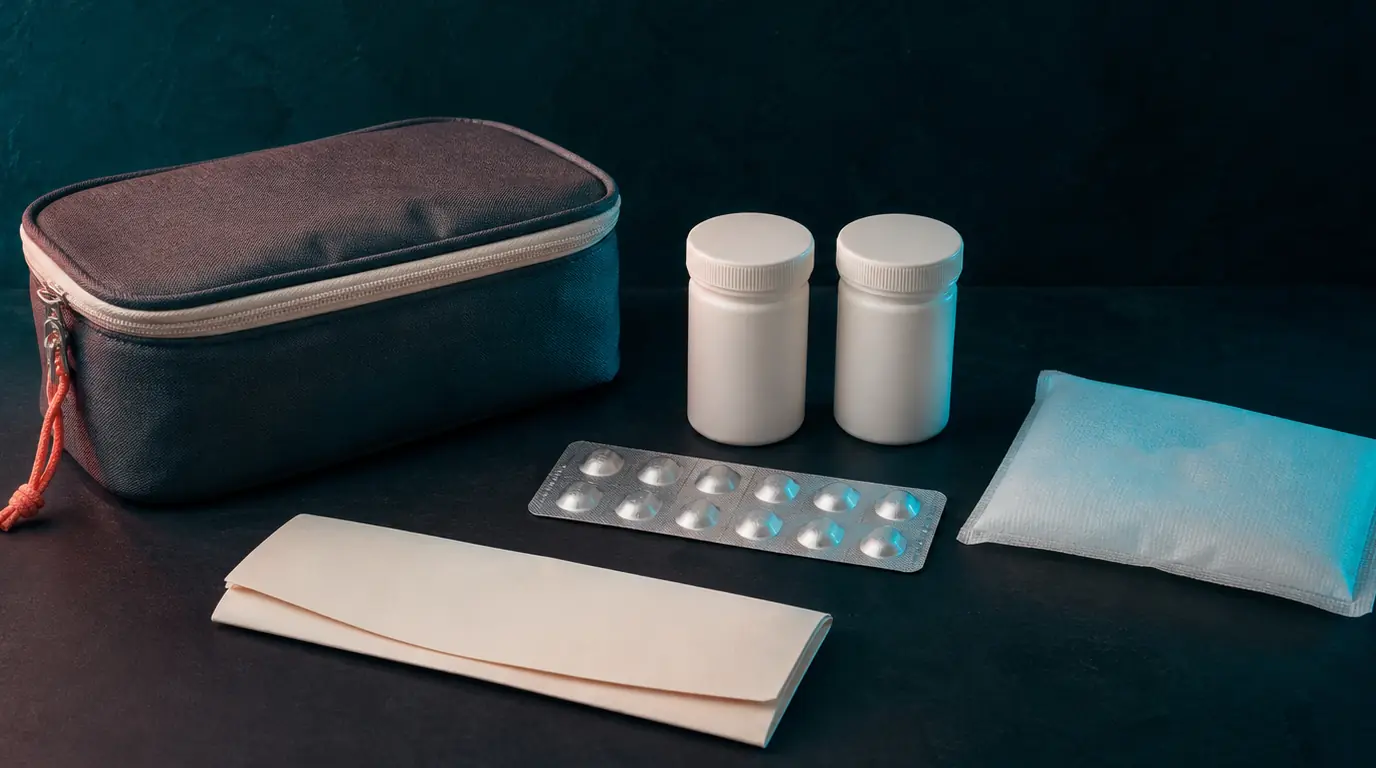
Flying with medication involves more than getting it through airport security. Airport screening, airline rules, border rules, and storage or dosing plans are separate issues. A medicine may pass U.S. screening but still require airline arrangements or face restrictions in a transit or destination country.
For international trips, a layover can add another border check. Before departure, list every country and operating airline on your route. Verify the medication and quantity with the relevant authorities, and ask a clinician or pharmacist about storage and time-zone dosing. Carry documentation and plan for delays, loss, confiscation, or unsafe storage. For related route-planning guides, return to the Flights hub.
Map Every Route Check
Write the itinerary in travel order before packing. Include the departure airport and country, every transit airport and country, the final destination, the return itinerary, and each operating airline. A connection that stays inside an airport may still have different rules from the final destination, especially if the medicine is controlled or restricted.
For each medicine, record the generic name, brand name, strength, form, amount, label information, and storage requirements. Also list related items such as syringes, sharps, injectors, pumps, batteries, cooling packs, or monitoring devices. This gives each authority the details it needs to answer its part of the question.
| Question | Authority to check | What the answer covers |
|---|---|---|
| Can the item pass through the airport checkpoint? | The airport-security authority, such as the Transportation Security Administration (TSA) in the United States | Screening procedures and inspection |
| Can the item be carried, powered, cooled, stowed, or used onboard? | The operating airline and relevant aviation-safety authority | Cabin conditions, batteries, devices, cooling, and hazardous materials |
| Can the medicine enter or transit the country? | The destination or transit-country embassy, customs office, health authority, or medicines regulator | Import law, controlled substances, quantities, permits, and documents |
| How should the medicine be stored or timed? | The prescribing clinician, pharmacist, or travel-health professional | Temperature limits, delays, refrigeration, and individualized timing questions |
Do not treat a “yes” from one system as approval from all four. The CDC guidance on traveling abroad with medicine says medicine laws vary by country and directs travelers to check both destination and layover-country authorities. Check the actual medicine, amount, documents, and travel dates instead of relying on a general statement about prescription drugs.
A route worksheet can use these fields:
- Route: Country and airport at each stop
- Operating airline for each flight
- Medicine: Generic and brand names of medicines
- Quantity and container details
- Controlled, injectable, refrigerated, or liquid status
- Handling: Device, battery, sharps, or cooling requirements
- Authority contacted and date checked
- Instructions or approval received
- Clinician or pharmacist questions still open
Keep copies of the completed checks with the travel documents. An email or letter supports your explanation, but it does not guarantee that a checkpoint or border officer will accept the item.
Prepare for Airport Security
TSA screening covers only the U.S. airport-security part of the trip. TSA’s complete item list permits medication subject to screening and gives special handling information for medically necessary liquids and medical devices. The list does not decide whether an airline will accept an item, whether a foreign country will allow it, or how to use the medicine.
Medication may be in pill, liquid, or other solid form, but screening can differ when an item is medically necessary or unusually large. Keep medication and related supplies organized so you can identify them if an officer requests more inspection. A separate pouch can help you find a liquid medicine, device, cooling accessory, or document without unpacking the rest of your luggage.
Declare medically necessary liquids
Medically necessary liquids, gels, and aerosols may be handled differently from ordinary personal liquids. TSA states that larger quantities may be allowed in reasonable amounts for the trip, subject to inspection. Tell the screening officer about these items before inspection. Do not assume that the standard liquid-container rule answers the question.
Cooling accessories can create a second screening issue. A frozen pack with medically necessary liquid may be treated differently from a partly frozen or liquid pack. A powered cooling device may also need separate inspection. Keep the medicine accessible and be ready to explain what each item is and why you need it. The explanation does not remove the need for screening.
The TSA Travel Checklist helps you prepare for U.S. checkpoint screening. Use it for checkpoint preparation only. It is not a customs guide, a destination-country medicine decision, or an airline equipment policy.
Keep security separate from entry
Passing through a United States checkpoint does not establish that:
- the medicine may enter a foreign country;
- the medicine is unrestricted in a transit country;
- the quantity is allowed for personal import;
- the airline will accept a battery, device, dry ice, or cooling method; or
- the traveler should change medication timing.
TSA officers assess security issues. Border authorities decide whether a medicine may enter or transit a country. Airlines apply aircraft-safety and operating rules. A prescriber or pharmacist addresses storage and timing. Keeping those roles separate prevents a common planning error: treating airport screening permission as a travel-wide authorization.
Handle Airlines and Storage
Airline rules matter especially when medication involves equipment, cooling, batteries, sharps, or use during the flight. Contact every operating airline, not just the company that sold the ticket, if your plan includes a pump, respiratory device, injector, powered cooler, significant batteries, dry ice, or medicine that must stay accessible during the flight.
Ask the airline about the exact item and intended use. Useful questions include:
- Advance notice: Is advance notice required?
- In-flight operation: Can the device operate during the flight?
- Stowage: Where must it be stowed during takeoff and landing?
- Batteries: What battery type, size, or spare-battery arrangement is allowed?
- Cooling: Are gel packs, frozen packs, or powered cooling equipment accepted?
- Dry ice: Is dry ice permitted, and what labeling or packaging is required?
- Sharps and liquids: Are sharps or unusually large liquid quantities subject to special instructions?
- Other carriers: Does a codeshare or connecting carrier apply a different rule?
The Federal Aviation Administration advises passengers to check airline, TSA, and aviation-safety guidance together before packing items that may have flight restrictions. The airline’s response should be retained with the travel documents, especially if an employee provides specific instructions or approval.
Plan carry-on packing
The CDC recommends carrying enough medicine for the full trip plus extra for delays. It recommends placing the medicine in carry-on baggage where permitted because checked baggage can be lost or delayed. This helps you manage disruptions, but it does not authorize every item on every route.
A carry-on plan has several parts. Keep essential medicine with the supplies needed to use it. Separate it from items that may be checked. Protect it from crushing, heat, freezing, and long exposure to airport conditions. Keep a list of generic names and the prescriber’s or pharmacy’s contact information where you can reach it. If a delay could affect your supply, ask the clinician or pharmacist about a backup plan in advance.
Do not rely on buying replacement medicine after arrival. The product may have a different name, strength, formulation, or legal status. A pharmacy may also require a local prescription. CDC discusses these risks and recommends preparing an adequate supply before departure.
Check cooling equipment
“Keep it cool” is not a complete transport plan. Gel packs, frozen packs, powered cooling cases, and dry ice are different items. Each has different screening and aviation requirements.
For medically necessary liquids, TSA handling may depend on whether a cooling pack is frozen solid at the checkpoint. Ask the airline about the carrier’s requirements for the rest of the flight, including whether crew members can store anything, whether a cooler may remain under the seat, and whether an external battery is allowed.
Dry ice has specific aviation conditions. FAA PackSafe dry-ice guidance states that airline approval is required, the passenger allowance is up to 2.5 kilograms or 5.5 pounds, and the package must let carbon dioxide escape rather than being airtight. This shows why a method that passes security may still need airline review. It does not establish permission for every carrier or country.
Before departure, ask a clinician or pharmacist about the medicine’s temperature limits, refrigeration needs, and how to respond if the cooling method fails. Do not place medication directly against frozen material unless the product instructions and a qualified professional support that arrangement.
Ask about devices
Pumps, injectors, respiratory equipment, glucose-monitoring supplies, and other devices can trigger questions about batteries, stowage, and use in flight. Provide the airline with the model and power requirements when asking for instructions. Carry spare batteries according to the airline’s requirements, and keep them protected from accidental contact if instructed.
United States disability-access protections can apply to assistive devices and personal medication associated with a disability, subject to safety rules. The Department of Transportation’s Bill of Rights should not be read as a universal right to carry unlimited medication or equipment on every international route. The exact carrier, aircraft, safety rule, and country still matter.
Check Border Rules
For international travel, the most important check is whether the medicine may enter or transit each country. A medicine commonly prescribed or sold in the United States may be unlicensed, controlled, or subject to quantity and documentation rules in another country. Check the embassy or competent authority for every destination and layover country on your route.
Find current information from the relevant embassy, customs authority, health ministry, medicines regulator, or controlled-drug office. Search for the medicine’s generic name. Check whether it is controlled, injectable, sedating, stimulant, narcotic, psychotropic, or refrigerated. If the authority requires a permit, certificate, preapproval, or declaration, find out whether you must apply before travel.
Do not use a commonly cited 30-day supply as a global limit. CDC notes that many countries allow a 30-day supply of certain medicines under particular conditions, but the amount, medicine category, documents, and procedures vary. The United Kingdom’s controlled-drug travel rules illustrate why each route requires a check of the actual country’s rules. Use that example to prompt a country-specific check rather than as a model for every traveler.
Use documents carefully
Original packaging can make a medicine easier to identify. CDC recommends original labeled containers and prescription copies that include generic names. When appropriate, a prescriber may provide a note, especially for controlled substances or injectable medicines.
A practical document set may include:
- the original pharmacy-labeled container;
- a medication list showing generic and brand names;
- a prescription copy;
- a clinician note when appropriate;
- the prescriber or pharmacy’s contact information;
- written airline instructions for devices, batteries, cooling, or dry ice;
- any permit, certificate, or confirmation required by a border authority.
These documents explain what you carry, but they do not replace an import permit, override a country’s law, or guarantee clearance. Do not remove medication from its labeled container to save space without checking how that could affect your route. Do not conceal a medicine or identify it only by a brand name when an authority requires the generic ingredient.
Leave timing to clinicians
Storage and time-zone dosing are separate clinical questions. A long flight, overnight connection, delay, or change in local time may affect how a time-sensitive medicine is managed. Do not create a new schedule on your own.
Ask the prescriber or pharmacist:
- What temperature range applies during the airport, flight, layover, and arrival?
- What should happen if refrigeration fails or a delay extends the trip?
- Timing: Does the route require an individualized timing plan?
- Are there concerns about an overnight connection or crossing multiple time zones?
- Documentation and supplies: What supplies or documents are needed if the medicine is controlled or injectable?
The CDC Yellow Book’s travel-health-kit guidance says kit contents should be individualized to the itinerary, trip duration, activities, access to care, group needs, expertise, and carrying constraints. That supports a route-specific packing plan rather than a universal medicine list.
Counterargument: Labels are enough
A prescription label plus TSA permission does not settle the trip. The label helps identify the medicine. TSA addresses United States checkpoint screening. The airline decides whether particular devices, cooling methods, batteries, or hazardous materials meet its operating conditions. Border authorities decide whether the medicine and quantity may enter or transit the country.
The same separation applies to a clinician letter. It can support an explanation of the traveler’s treatment, but it does not authenticate the medicine for every border authority or guarantee entry. If the route includes a controlled medicine, contact the relevant authority before booking or before the departure deadline for any required permit.
Keep Jet Lag Separate From Medication Timing
Jet lag is a circadian problem. It occurs when the body’s internal clock does not match local time after rapid travel across time zones. The CDC Yellow Book jet-lag chapter distinguishes eastward travel, which generally requires moving the body clock earlier, from westward travel, which generally requires moving it later.
A careful plan records the route rather than relying on a generic calculator. Write down:
- direction of travel, east or west;
- number of time zones crossed;
- usual sleep and wake times;
- local arrival time;
- first-day obligations such as work, driving, caregiving, or sport;
- expected light exposure;
- medication timing and storage questions;
- the point at which a clinician or travel-health professional should advise.
The CDC Yellow Book identifies direction, time zones, sleep, light exposure, individual factors, medication use, and route-specific factors as relevant. Its air-and-sea travel hub places jet lag within broader travel-health planning.
The chapter gives approximate population averages of about one hour of adjustment per day after eastward travel and 1.5 hours per day after westward travel. Use these figures only as general guidance. They do not predict one person’s recovery date, set a treatment schedule, or justify changing a medication plan.
Do not start, stop, substitute, or retime medication based only on a time-zone calculation. Sleep and light planning may also require individual judgment, particularly when the traveler has a condition, uses medicines that affect alertness, or must drive or perform safety-sensitive duties soon after arrival. The CDC chapter is written for health professionals and does not establish one personal plan for every traveler.
Checklist Before You Fly
- Check every country: Verify the medicine, quantity, documents, and current requirements with authorities in the destination and every transit country.
- Separate the four decisions: Keep United States checkpoint screening with TSA, aircraft conditions with airlines, import law with border authorities, and storage and timing with clinicians or pharmacists.
- Protect the supply: Keep enough medicine for the trip plus a delay margin in a carry-on plan where permitted, because checked baggage can be lost or delayed.
- Document without assuming: Use original labels, generic-name prescription copies, and clinician notes where appropriate, but treat them as supporting documents rather than guarantees.
- Plan jet lag conservatively: Record the direction of travel, time zones, sleep, light, arrival duties, and medication questions, and do not change a schedule independently.
FAQ
Can I bring medication through TSA screening?
Yes. TSA’s medication screening guidance treats medication as permitted subject to screening and provides separate information for medically necessary liquids and devices. This applies to United States airport security only, not airline carriage or foreign border entry.
Are original containers required?
CDC recommends original labeled containers for international travel preparation and prescription copies that include generic names. That recommendation helps identify the medicine, but it is not a universal TSA requirement and does not guarantee entry into another country.
Is a clinician letter enough?
No. A clinician letter may help explain controlled or injectable medication, but the destination and transit-country authorities decide whether the medicine and amount may enter. Check the relevant authority for current permits, certificates, and quantity rules.
How much medication can I carry?
There is no single international quantity rule. CDC notes that many countries allow a 30-day supply of certain medicines under specific conditions, but the actual limit may depend on the medicine, country, documentation, and travel date.
Should medication go in checked baggage?
CDC recommends a carry-on plan where permitted, with enough medicine for the trip plus extra for delays. Cooling equipment, batteries, devices, dry ice, sharps, and large liquid quantities may still require airline review.
When should I contact the airline?
Contact the operating airline before travel when the itinerary includes a device used in flight, significant batteries, dry ice, refrigeration, special cooling, sharps, or unusually large liquid quantities. Ask for instructions specific to the item and keep any written response with the travel documents.
Can jet lag always be prevented?
No. The CDC Yellow Book describes jet lag as circadian misalignment influenced by direction, time-zone shift, sleep, light exposure, medication use, route factors, and individual differences. It does not provide a guaranteed adjustment schedule or a universal treatment plan.