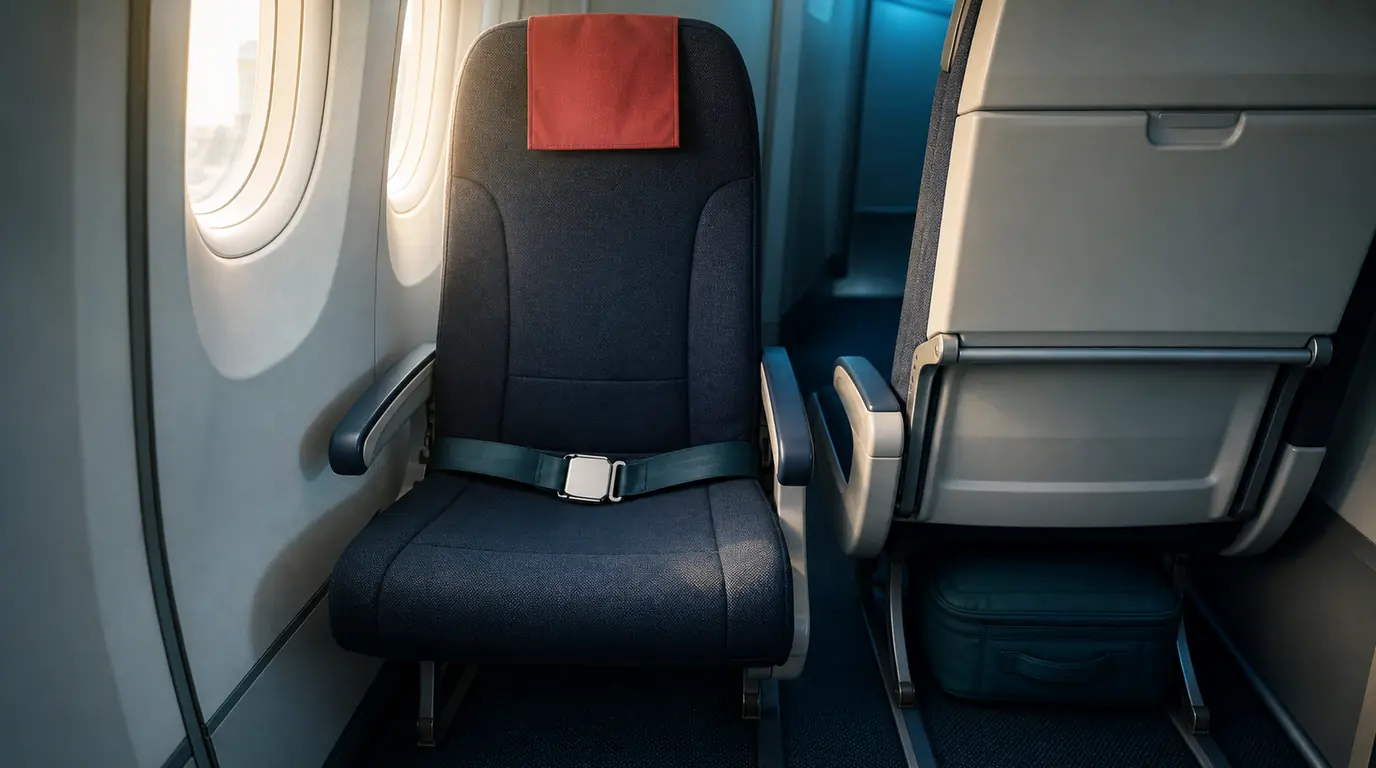
Turbulence is irregular air movement that can start without warning, even in clear skies. Keep your seat belt fastened whenever you are seated, wear it correctly, and respond promptly to the seat belt sign and cabin crew.
The FAA’s current passenger guidance focuses on seat belts, approved child devices, secured carry-ons, and crew instructions. These steps cannot prevent every injury, but they reduce avoidable risk when the aircraft moves before passengers can react. The guidance reflects FAA passenger-safety information checked on July 31, 2026.
Why Warnings May Fail
Passengers generally cannot see turbulence from the cabin, and it can occur unexpectedly. A clear view through the window does not rule it out. A smooth ride so far does not reliably show that the aircraft will stay smooth. The FAA describes turbulence as air movement that can occur even when the sky appears clear. See the FAA’s current turbulence guidance for its passenger recommendations.
Passengers do not need to identify clouds, judge the route, or predict whether the aircraft will encounter turbulence. They can prepare at their seat:
- Sit down unless you are carrying out an essential cabin task.
- Before the aircraft moves, fasten the belt.
- While seated, keep the belt fastened.
- Wear the lap portion low and snug across the hips.
- When the sign illuminates or the crew instructs you to sit, stop nonessential movement.
A seat-belt sign gives an instruction. It is not a forecast. When it is off, the FAA still recommends staying buckled while seated because unexpected movement can begin before passengers have time to return to their seats. When it is on, passengers must sit and fasten their belts.
The FAA’s record for AC 120-88A, “Preventing Injuries Caused by Turbulence,” gives air carriers and related personnel operational context. For passengers, the practical point is simple: do not depend on an advance warning to prepare.
Make the Belt Routine
Keep the seat belt fastened whenever you are seated, including when the illuminated sign is off. This habit goes beyond the times when passengers must be seated and belted, such as during taxi, landing, and when the sign is illuminated. The FAA recommends it because turbulence may start before a seated passenger has time to buckle up.
Wear it low and snug
The lap belt should rest low and tight on the hips, not across the abdomen. The FAA gives this instruction in its Passenger Safety Tips. After fastening the belt, check that the lap portion sits across the upper hips and is snug and flat.
This position helps the belt restrain the body and limit forward movement. It is not a guarantee against injury, and passengers should follow the instructions for the particular restraint installed in their seat. The practical rule is easy to remember: seated means buckled, and buckled means low on the hips.
Do not treat a recently smooth cabin as a reason to undo the belt. If you need to adjust clothing, reach for an item, or change position, keep the belt fastened where possible. A belt that is already secured offers protection before a sudden jolt rather than requiring a reaction after movement has started.
Follow the sign and crew
Pay immediate attention to the illuminated seat-belt sign and cabin-crew instructions. If the sign comes on while you are seated, stay in your seat with the belt fastened. If a flight attendant tells passengers to sit, secure belongings, or stop moving through the cabin, follow the instruction at once. Do not wait for a larger bump.
The crew may have information that passengers cannot see or may be preparing the cabin for changing conditions. A sign turning off does not mean that movement is impossible, and a sign turning on is not an invitation to finish one more task in the aisle. Crew instructions control the immediate cabin response on the flight.
Pay attention to the safety briefing and review the safety card early in the trip. Knowing where the belt releases and how the cabin instructions work makes it easier to respond without delay.
When the sign is off
Some passengers use the sign as the only signal for wearing a belt. That approach meets the visible instruction but misses the FAA’s broader recommendation to stay buckled whenever seated. The reason is timing: if movement begins suddenly, an unbelted passenger may have no useful opportunity to secure the belt first.
Keeping the belt fastened while seated requires little effort and does not require passengers to predict conditions. It is a low-complexity habit that remains useful when the sign is off and becomes mandatory when the sign illuminates.
Secure People and Items
Seat belts protect the person wearing them, but cabin preparation also concerns children and objects that can move during a sudden change. Use an approved restraint for a young child, comply with the airline’s carry-on restrictions, and keep permitted belongings stowed as directed.
Use approved child restraints
An adult’s arms are not a reliable restraint during unexpected aircraft movement. FAA guidance identifies a government-approved child seat or device as the safest place for a child under age two. Its general passenger-safety guidance also recommends an approved child safety seat or device for a child weighing less than 40 pounds.
Use the appropriate approved device for the child and follow the operating airline’s and cabin crew’s instructions. Airline policies can determine which devices are accepted and how they must be used, so travelers should check the airline’s current requirements before departure rather than assume that any child seat will be handled identically on every flight.
The same basic rule applies during a smooth portion of the trip. Do not wait for the first jolt before placing a child in the approved restraint. Unexpected movement may arrive before an adult can lift, reposition, or secure a child safely.
Stow cabin belongings
Follow airline carry-on restrictions and place personal items where the crew tells you to stow them. A loose object can shift, fall, or move through the cabin when the aircraft changes motion. The FAA’s passenger tips link compliance with carry-on restrictions to a lower risk of in-flight injury.
Do not leave a phone, bottle, book, bag, or other permitted item in a position where a sudden jolt could send it into the aisle or toward another person. The precise stowage rule depends on the airline and the phase of flight, so use the crew’s directions rather than improvising a personal storage standard.
For the separate question of how airlines generally classify cabin belongings, see personal item versus carry-on. That classification does not replace the crew’s instructions about where an item must be placed during the flight.
Limit unnecessary movement
Remain seated and belted when you do not need to move. Plan ordinary lavatory use when the sign is off and the crew permits passengers to leave their seats. Waiting until the last possible moment can create a difficult choice if the sign illuminates while you are still deciding whether to get up.
This does not mean ignoring an urgent bodily need. If you need assistance or conditions change while you are away from your seat, tell a flight attendant and follow the direction given. When the sign is on, stop nonessential movement. Do not substitute your own judgment for the cabin crew’s instruction about whether to walk, wait, or return to your seat.
The FAA’s operational material discusses preparing passengers for periods when they must remain seated and belted, including taking care of personal needs before those periods. The passenger-facing decision remains conservative: move when permitted, and stop when instructed.
Respond After a Jolt
A sudden jolt can cause confusion, especially when people are standing, reaching for bags, or caring for children. First, protect yourself from more movement: sit down if directed, fasten the belt, and listen for the next crew instruction.
Do not stand to inspect the cabin while the aircraft is still moving or while the sign is illuminated. If a bag has shifted, a tray has spilled, or another item appears unsafe, tell a flight attendant first; do not reach into an unstable area yourself.
Report injury or hazards
If you are injured, see someone who may be injured, or notice an unsafe condition after turbulence, notify a flight attendant as soon as it is safe. Describe clearly what happened and where the problem is. The crew can decide what immediate help or cabin response is needed.
Remain seated and belted unless a crew member gives a different instruction. Do not assume a particular medical response, compensation outcome, or formal investigation. The useful passenger action is prompt notification. FAA operational guidance treats injury information and post-encounter details as relevant to reviewing turbulence events, while the cabin crew manages the immediate situation.
For broader trip planning, the Flights collection covers general flight topics. The Cabins collection addresses cabin choices without treating any seat location as an injury-proof solution.
FAQ
Should I keep my seat belt on when the sign is off?
Yes, keep it fastened whenever you are seated. FAA passenger guidance recommends this because turbulence can occur unexpectedly, even during an otherwise smooth period.
How should the lap belt fit?
Wear it low and tight on your hips, not across your abdomen. Check that the belt lies flat and is not twisted, then follow any additional instructions from the crew.
Does clear weather mean turbulence will not occur?
No. Turbulence can occur when the sky appears clear, and passengers may not see it developing from the cabin. Use restraint and crew instructions as your safety plan rather than trying to read the weather outside.
What should I do if the sign comes on while I am out of my seat?
Stop treating the movement as routine and follow the cabin crew’s direction. Use available support, avoid rushing, and return to your seat or wait as instructed. If you have an urgent need, tell a flight attendant.
Is holding a young child enough?
No. An adult’s arms are not a dependable restraint during unexpected movement. FAA guidance identifies an appropriate approved child seat or device as the safest place for a child under age two and recommends approved child restraints for children weighing less than 40 pounds.
What if my carry-on is not stowed when the sign illuminates?
Follow the crew’s instruction immediately. Do not delay to reorganize the bag or retrieve another item if passengers are being told to sit. Ask a flight attendant for help when it is safe.
What if I am injured during turbulence?
Tell a flight attendant as soon as it is safe to do so, whether the injury is yours or you observed someone else being hurt. Stay seated and buckled unless the crew directs you otherwise.