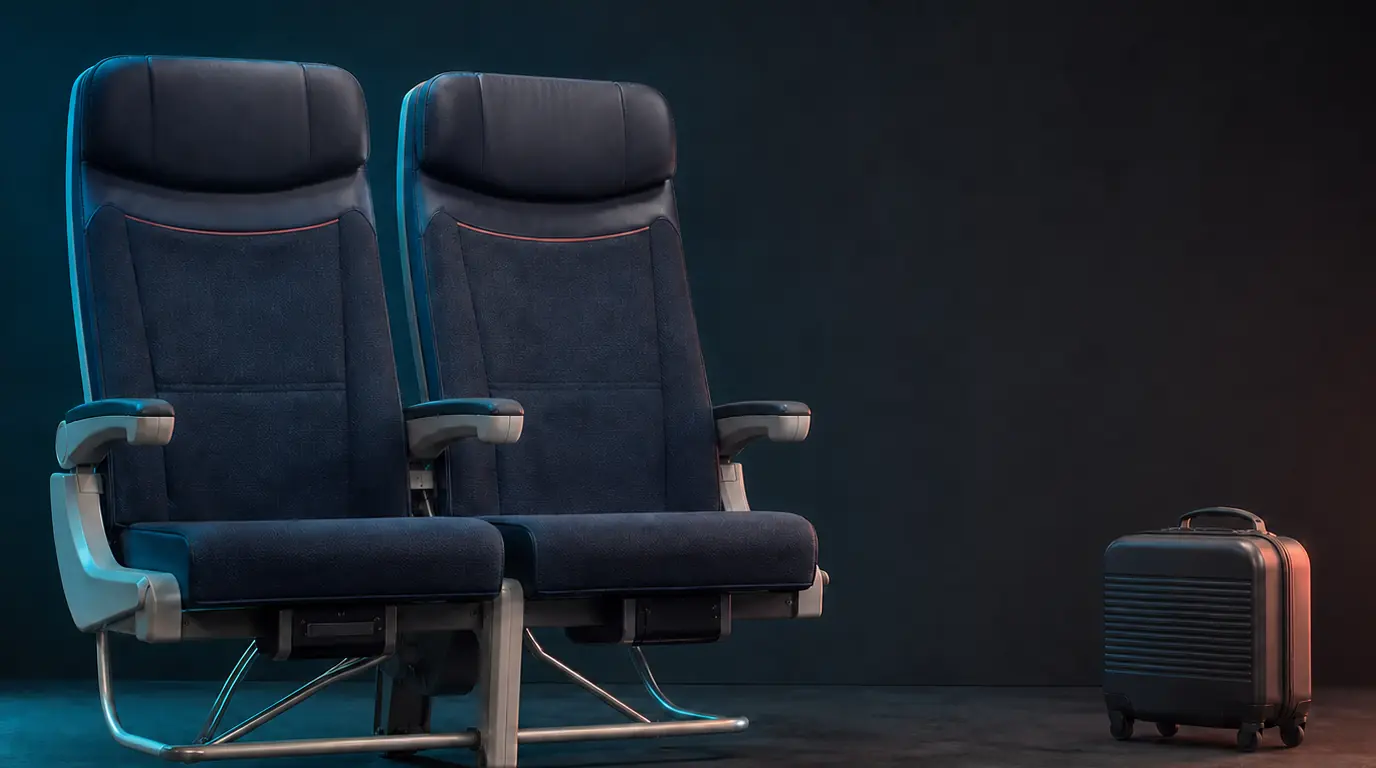
Use this worksheet to request and confirm a disability-related seating accommodation that meets a traveler’s functional need during a flight. This is separate from choosing a seat number, paying for extra legroom, choosing a cabin, requesting an exit-row seat, or asking for an upgrade. For a United States itinerary involving Iliamna, describe the function needed, send the request to the airline operating each flight, and keep the carrier’s current confirmation for every segment. For related route-planning guides, return to the Flights hub.
In the United States, the Air Carrier Access Act and current 14 CFR Part 382 provide the governing framework. The rule and the operating carrier’s procedures control. A booking-screen label or assumption about a traveler’s diagnosis does not control. Aircraft, carriers, airports, schedules, and connections can change, so check the request again after any itinerary change.
Key Takeaways
- Describe the function you need: Ask for the seating feature or airport support that addresses your stated need rather than relying only on a preferred row or seat number.
- Separate the records: Keep seating, terminal or connection assistance, and transport or stowage of a personal wheelchair or assistive device as separate requests.
- Contact each operating carrier: Confirm the request on every flight segment. Do this especially when the booking includes a codeshare, connection, aircraft change, or different carrier.
- Keep safety and class limits in view: Part 382 does not require more than one seat per ticket or a higher cabin class. Applicable safety rules still govern seat assignments.
- Reconfirm after changes: Record the request, contact channel, confirmation number, operating carrier, airport handoffs, aircraft, schedule, and current seat assignment. Verify those details again whenever anything changes.
Separate the Requests
A traveler may need a seating accommodation, airport assistance, personal-device handling, or several of these at once. These requests affect the same trip, but confirming one does not confirm the others.
A seating accommodation concerns the aircraft seat and the function it must support. Airport assistance concerns movement through the terminal, such as reaching a gate, changing gates, using a ticket counter, or leaving the terminal after arrival. Personal-device arrangements concern transporting, stowing, handling, safeguarding, and returning a wheelchair, scooter, or other assistive device.
For an itinerary involving Iliamna, create a separate line for each request:
| Request | What to confirm |
|---|---|
| Disability-related seating | The functional need, applicable flight segment, operating carrier, current seat information, and accommodation confirmation |
| Airport or connection assistance | The airport stage, meeting point or destination, connection handoff, operating carrier, and confirmation |
| Personal wheelchair or assistive device | The device details requested by the carrier, transport or stowage arrangement, and confirmation for each segment |
A request for airport wheelchair assistance does not confirm that the carrier will transport or stow a personal wheelchair as the traveler needs. Likewise, a confirmed seat number does not show that the carrier recorded the disability-related seating request.
The DOT Airline Passengers with Disabilities Bill of Rights summarizes rights involving dignity and respect, accessible information, airport and onboard assistance, assistive devices, and seating accommodations. It is useful for orientation, but the current regulatory text and the facts of the individual request control.
Describe the Needed Function
Start by stating what the traveler needs the seat to do. Do not infer a diagnosis, decide whether a regulatory condition applies, or choose an assistance type based on a general label.
A request might state that the traveler needs:
- a movable aisle armrest because transferring over a fixed armrest is not workable;
- an adjoining seat for a person providing a specified form of assistance;
- a bulkhead or non-bulkhead seat location for travel with a service animal;
- a bulkhead or other seat with greater legroom because a leg is fused or immobilized;
- another seat location or process that the carrier handles under its disability-related procedures.
Use factual, functional wording. For example:
“I am requesting a disability-related seating accommodation for the function of [describe the seating need]. Please record this separately from my current seat number and confirm the request for each flight segment.”
The traveler does not need to add a diagnosis instead of the functional request. The record should state the practical limitation or feature needed, the affected segment, and any relevant connection.
Use the same approach for airport assistance. A traveler might request a guide, help moving from the terminal entrance to the gate, help between gates during a connection, or help from the arrival gate to the terminal exit or adjacent pickup point. The requested assistance should match the traveler’s needs. Airline personnel should not replace it with a different type of help just because that seems more convenient.
Contact the carrier operating each flight. The company shown during booking may not operate every segment. The aircraft layout may also determine whether a particular seating accommodation is available. For a connection, the carriers may coordinate the handoff, but the confirmation should state who is responsible for each stage.
Part 382 generally applies to covered air transportation within, to, or from the United States. It is not a universal rule for unrelated international flights. When an itinerary includes a flight outside that scope, the applicable law and carrier procedures may differ.
Apply the Seating Rules
The current 14 CFR § 382.81 identifies four central situations in which carriers must make specified seating accommodations when the passenger self-identifies under the applicable circumstance and the accommodation exists on that aircraft.
Four specified situations
The first situation involves a movable aisle armrest for a passenger who uses an aisle chair and cannot readily transfer over a fixed armrest.
The second is an adjoining seat for certain assistants. Examples in the regulation include a personal care attendant performing a function airline personnel are not required to perform, a reader or assistant, an interpreter, or a required safety assistant.
The third involves a choice between a bulkhead and non-bulkhead seat for a passenger traveling with a service animal.
The fourth involves a bulkhead seat or another seat with greater legroom for a passenger with a fused or immobilized leg, on the aisle side that better accommodates the disability.
These categories describe situations covered by the regulation. They do not replace the carrier’s request process. A traveler should state the function needed and ask the airline to record and send the request to the personnel responsible for the flight. The traveler should not have to decide from a general description whether a specific legal category applies.
The DOT Bill of Rights also explains that passengers outside the specifically listed situations may still be assigned a seat that best accommodates their disability when they follow the airline’s procedures. That possibility does not authorize anyone outside the carrier process to decide the outcome.
Carrier seating methods
Airlines may use different methods to provide seating accommodations. The Department of Transportation’s seating-method guidance describes three general approaches.
With a block method, the carrier holds an adequate number of relevant seats for qualifying accommodation requests. Timing can affect how the carrier handles a request, particularly when the request arrives close to departure.
With a priority method, the carrier designates priority seats and may set a request deadline connected to its standard check-in process. A late request may still be handled to the carrier’s best ability, but the carrier’s process can affect whether an already assigned seat is reassigned.
With a preboarding method, the carrier does not make advance seat assignments for the relevant accommodation process. A passenger who needs a particular seat location can use preboarding to select a seat that best meets the need under the carrier’s procedure.
These methods show why a booking screen is not enough. Ask the operating carrier which process applies, whether it entered the functional request, and what the traveler must do at the airport. If the traveler needs more time or help to board, stow accessibility equipment, or get seated, tell airline personnel at the gate. Part 382 requires carriers to offer preboarding in that situation.
Safety and class limits
A disability-related accommodation does not automatically provide a preferred row, a paid extra-legroom product, a cabin change, or an exact seat number. Part 382 does not require a carrier to provide more than one seat per ticket or move a passenger to a higher class of service than the class purchased.
Applicable FAA and foreign-government safety requirements also remain relevant. Exit-row seating is governed by safety rules and should not be treated as a general disability-related accommodation. A traveler should ask for the function needed, not assume that an exit row is appropriate.
Record two different items:
- the carrier’s confirmation that the functional accommodation request was entered and transmitted; and
- the seat number currently assigned, if one exists.
A seat number can change after an aircraft substitution, schedule disruption, carrier change, or other operational adjustment. The functional request should be reconfirmed separately.
Coordinate Airport Handoffs
A seating request covers the aircraft part of the trip. A traveler who needs help moving through an airport should make a separate request for each relevant stage.
Under 14 CFR § 382.91, terminal assistance can include movement from a terminal entrance or adjacent drop-off point to the gate, access to ticket counters and baggage claim, movement between gates during a connection, and movement from an arrival gate to the terminal exit or adjacent pickup point.
List specific starting points and destinations instead of writing only “wheelchair assistance.” For example, the record might identify:
- departure terminal entrance or adjacent drop-off point to the ticket counter, if needed;
- ticket counter to the departure gate;
- arrival gate to the onward gate during a connection;
- onward gate to the aircraft door or boarding area;
- arrival gate to baggage claim, terminal exit, or adjacent pickup point.
A connection needs its own handoff record. If different carriers operate the arriving and departing flights, the carrier operating the arriving flight remains responsible for ensuring between-gate assistance, even if the departing carrier provides it under the carriers’ arrangement. The traveler should still ask the carrier to confirm the handoff and identify the arrival and departure gates when available.
Do not assume that the airport or Iliamna itself provides airline assistance. Confirm the requested service with the airline operating the flight. Airports and carriers may have separate personnel and procedures, and a booking platform may not contain the details needed for the handoff.
A practical request could say:
“I am requesting assistance from [specified airport stage] to [specified destination]. For my connection, please confirm the handoff from the arriving flight to the departing gate and identify the operating carrier responsible for ensuring that assistance.”
The request should reflect the traveler’s need. The DOT Bill of Rights states that a carrier cannot require a person to accept a form of assistance that the person did not request, such as requiring wheelchair assistance when the person requested a sight guide. That distinction helps prevent a general service label from replacing the actual function.
Keep Device Arrangements Separate
A personal wheelchair, scooter, or other assistive device needs a separate record from terminal movement assistance. When relevant, record the device arrangement for each segment and ask the operating carrier to confirm how it will transport or stow the device.
The December 2024 wheelchair final rule strengthened provisions involving wheelchair handling, transfers, training, notifications, and recovery. However, DOT delayed enforcement of four identified provisions through December 31, 2026 while considering further rulemaking. That enforcement status does not suspend enforcement of the remaining provisions, and it does not support a promise about a particular notification, handling result, remedy, or recovery outcome.
Keep the device record distinct:
- device type and relevant dimensions or handling information requested by the carrier;
- whether the device is intended for cabin stowage, cargo transport, or another arrangement;
- the segment and operating carrier;
- the location and timing for handing over the device;
- the location and timing for its return;
- the carrier’s confirmation number or reference.
Terminal assistance can help a traveler move through an airport while the personal device follows a separate handling process. Confirming one does not confirm the other.
Reconfirm Every Segment
For each segment, keep a record that identifies the request and the handoffs among the traveler, the airline’s reservation system, airport personnel, and the crew:
| Record field | Entry to preserve |
|---|---|
| Functional seating request | The feature or seating function requested in the traveler’s own words |
| Separate request type | Seating, terminal assistance, connection assistance, or device handling |
| Contact channel and date | Website, phone, accessibility desk, reservation contact, or airport contact used |
| Confirmation | Case number, reference, written response, or other carrier confirmation |
| Operating carrier | Carrier operating each individual flight |
| Airport stages | Departure, connection, arrival, ticket counter, baggage claim, and pickup stages requested |
| Connection handoff | Arriving carrier, departing carrier, gates when known, and requested transfer support |
| Aircraft and schedule | Current flight, aircraft information when provided, date, and schedule |
| Seat assignment | Current seat number, recorded separately from the accommodation request |
| Device arrangement | Transport or stowage details for a personal wheelchair or other assistive device |
Check the record again if the operating carrier, flight number, aircraft, departure or arrival airport, connection, date, schedule, cabin, or seat assignment changes. When applicable, ask the carrier to confirm all three records again: the functional seating accommodation, airport assistance stages, and personal-device arrangement.
Reported complaint data shows why precise records matter, but it does not predict what will happen on one trip. DOT’s 2024 all-carrier table reported 50,894 disability-related complaints, including 4,068 seating-accommodation complaints and 30,164 failure-to-provide-assistance complaints. These are reported complaint counts, not failure rates, proven violations, traveler counts, or forecasts for an itinerary involving Iliamna. They also do not rank airlines or establish what happened in any individual case.
If the carrier does not give a clear answer, ask for its accessibility or disability-services contact and keep the correspondence. At the airport, tell airline personnel what you need and ask them to check the recorded request. A traveler may also review the current Part 382 text and DOT disability-rights information to compare the request with the carrier’s confirmation.
- Use functional wording: State what the seat must allow the traveler to do, then ask the operating carrier to record that request separately from any assigned seat.
- Map the handoffs: List the stages involved, including terminal entry, ticket counter, gate, connection gate, baggage claim, and terminal exit, instead of using one general assistance label.
- Separate device handling: Confirm transport or stowage of a personal wheelchair or assistive device separately from airport wheelchair or guided assistance.
- Recheck changed itineraries: After any change, verify the operating carrier, aircraft, schedule, connection, airport stages, functional accommodation, device arrangement, and seat assignment.
- Apply the current rule: Use the full current Part 382 regulation for the United States rather than treating a static summary or booking display as the controlling record.
FAQ
Is a disability-related seating accommodation the same as paid seat selection?
No. Paid seat selection generally records a chosen seat number or retail seat product. A disability-related accommodation records a functional need under the carrier’s disability-access process, so keep the accommodation confirmation separate from the seat number.
Does a seating request provide an upgrade or an extra seat?
No. Part 382 does not require more than one seat per ticket or a higher class of service than the class purchased in order to provide a covered accommodation. The carrier’s current procedures, aircraft layout, and applicable safety rules still matter.
Can I request airport assistance separately?
Yes. Request terminal or connection assistance as its own record. Section 382.91 addresses assistance through specified airport stages, including movement between gates during a connection, but that request does not automatically confirm a seating accommodation or personal-device arrangement.
Does wheelchair assistance include my personal wheelchair?
No. Airport movement assistance and transport or stowage of a personal wheelchair or other assistive device are separate matters. Ask the operating carrier to confirm device handling for each flight segment.
What if I need more time to board or get seated?
Self-identify to airline personnel at the gate and state that you need additional time or assistance to board, stow accessibility equipment, or get seated. Part 382 requires carriers to offer preboarding in that circumstance, while the carrier’s current process determines how the boarding handoff occurs.
Can I request an exit-row seat as an accommodation?
Do not treat an exit-row seat as a disability-related accommodation. Exit-row assignments remain subject to applicable FAA and other safety requirements, so request the seating function needed instead.
What if my flight changes aircraft or operating carrier?
Recontact the operating carrier and ask it to reconfirm the functional seating request, current seat assignment, airport assistance stages, connection handoff, and personal-device arrangement if applicable. A change can alter the seat layout, carrier responsibility, or airport handoff.
What if a connection uses two different carriers?
Ask for a written or reference-number confirmation of the connection handoff. Under § 382.91, the carrier operating the arriving flight remains responsible for ensuring between-gate assistance, even if the departing carrier performs it under the carriers’ arrangement.