Passenger count, baggage dimensions, schedule, access needs, and airport constraints are inputs to a real operational assessment. They are not enough for a static website to select an aircraft. Use the brief to make proposals comparable and expose what still needs an aircraft-specific answer.
Why this configurator refuses to match an aircraft
A glossy selector can imply that a cabin category and an advertised range settle the mission. They do not. A particular departure can depend on the exact aircraft, its installed equipment and current condition, people and baggage, fuel plan, runway, elevation, temperature, wind, weather, reserves, crew, and operator procedures.
FAA weight-and-balance material explains that people, baggage, cargo, and fuel form part of the operating load. It also describes how overload can affect takeoff runway needs, obstacle clearance, climb performance, and stall speed. Those are operational matters, not fields a publication should turn into a casual consumer score.
Treat a marketing range or seat figure as a starting fact about a configuration, not proof that the proposed aircraft can carry your party and baggage from the requested airports on the requested day.
Count people and baggage before talking cabin class
Include every traveler, including children and infants. Describe bags by count, approximate dimensions, and weight when the operator asks. Identify long skis, instruments, mobility devices, batteries, medical equipment, trade samples, or other items that cannot be treated as an interchangeable suitcase.
The operator may ask to revise the baggage plan, stop for fuel, use a different airport, or propose another aircraft. The builder does not predict which response is appropriate. Its job is to prevent an underspecified request from producing a proposal that later changes.
Describe the practical cabin requirement
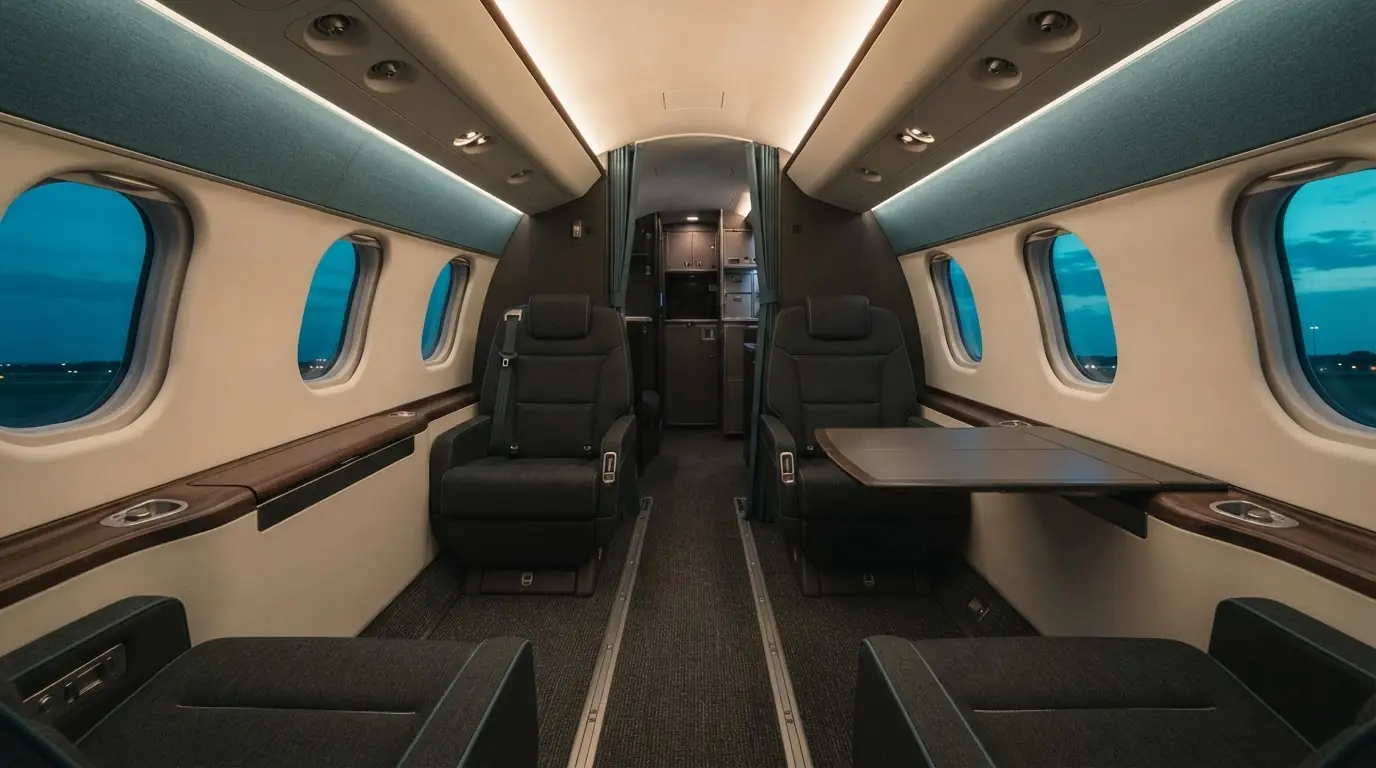
“Luxury” is too vague to compare. Ask whether the exact proposed aircraft has the needed boarding arrangement, seat layout, lavatory, work surface, baggage access, power, communications, or sleeping arrangement. A model family can contain different interiors, and a substitute aircraft can change the answer.
For accessibility, explain the task rather than disclosing more personal information than needed. Ask about steps, door width, transfer assistance, mobility-device dimensions and stowage, battery handling, aisle access, lavatory access, and the responsible contact. Confirm the exact plan before travel. This tool does not determine legal rights or whether equipment can be carried.
Flag complexity before it becomes a surprise
International, overwater, mountain, high-elevation, unusual-runway, winter, and remote-airport needs belong in the first brief. They can affect permits, handling, equipment, crew experience, alternates, fuel, schedule, passenger documentation, and recovery planning.
The NBAA consumer guide frames charter shopping as learning which questions to ask and which answers to expect. NBAA also says its guide is not legal advice or an endorsement and does not warrant the competency of a selected operator or broker. Use industry questions as prompts, not as a seal of approval.
In the United States, verify both operator and aircraft
The FAA describes commuter and on-demand air charter under 14 CFR Part 135 and tells consumers to research the company they hire. Current FAA guidance says a person paying for charter should ask to see the operator's Air Carrier or Operating Certificate and validate that the proposed aircraft is authorized for charter use.
The name on the website or invoice may be a broker rather than the direct air carrier. Ask who will operate every segment, who has operational control, and whether another broker is involved. Repeat the check if the aircraft or operator changes.
FAA consumer warning signs include a company providing aircraft and crew while trying to transfer operational control to the customer, lack of a safety briefing, evasiveness, and coaching about what to say to an FAA inspector. A static tool cannot decide whether a particular arrangement is lawful. It can ensure the questions do not disappear from the brief.
Before accepting a proposal
- Identify the direct air carrier and every broker in the chain.
- Confirm the exact aircraft, registration, cabin layout, and authorization.
- Get the total price, currency, taxes, fees, and payment schedule in writing.
- Record cancellation, delay, repositioning, deicing, and diversion terms.
- Ask what happens if the aircraft, crew, airport, or schedule changes.
- Require the same checks for any substitute operator or aircraft.
- Confirm baggage, pets, access, catering, ground handling, and international support.
- Keep the proposal and disclosures that applied when you agreed.
Price matters, but a lower number is not comparable when it excludes a fee, assumes a different cabin, leaves baggage unresolved, or depends on an operator and aircraft that have not been identified.
The brief stays on the device
The builder asks for no name, email, phone, company, payment detail, booking reference, or passenger identity. It does not submit or retain the text. The site receives ordinary page-level Plausible analytics, not the form values.
Avoid entering passport numbers, dates of birth, diagnoses, card details, confidential business plans, or other sensitive information. A copied or printed brief becomes your own document to handle and redact.
A good private-flight brief makes the unknowns visible before they become expensive changes.